Life Lessons From A Fortune 500 CFO
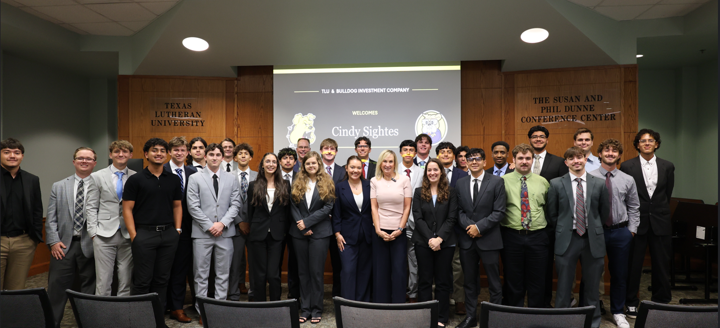
Recently, my Texas Lutheran University students hosted Cindy Sightes on campus. Starting at age 30, Sightes served HCA Healthcare in the CFO role at several levels, the last being a six-year tenure for the entire United Kingdom.
Interactions like this supercharge education with relevance and tangible examples.
At 17, Sightes left high school and, against her parents’ advice, followed a boy to college. Their concerns proved justified: he was not a good person, but Sightes was stubborn and naïve.
As such, Sightes encouraged the audience to listen to people with more experience than you. Even if you disagree, take time to hear them out and determine how an opposing perspective might be correct.
Early in Sightes career, she was broke, raising three kids. She joked that her best class to prepare for success was the “poverty” class. She added that when you’ve had so little, for so long, having to raise three young kids, you become very motivated.
While at the University of Arkansas, Sightes earned an accounting degree and became a healthcare auditor to pay bills. In discussing this, Sightes added that accounting is more science, but success in business is an art. You cannot be one-dimensional. You must be a multi-faceted problem solver throughout any organization.
Sightes expanded by stating, “I didn’t just want to report numbers. I wanted to strategize. I tried to figure out how to make the doctors happy and produce cash flow. You must understand how numbers impact everyone and how you drive value for others.”
Early in Sightes career she admitted she missed a governmental filing deadline. Her company was fined $250,000 and she was convinced she would be fired. When asked about the charge, Sightes told her boss she got overwhelmed and missed the deadline. She didn’t blame anyone. She acknowledged it was her fault and worked with regulators to fix it.
In walking through this, Sightes told the students, “You must accept responsibility for your decisions. You cannot blame others. For every decision made, people watch and assess your character. You must be self-reflective on how to improve. I was always assessing why others got promoted instead of me. I used this to make better decisions.”
As the CFO’s career gained momentum, she became known as the “Dr. Whisperer” because she was a good listener and could find win-win situations within the hospital. This allowed her to make connections and network in a manner that allowed broad success.
To accomplish this, Sightes said you must be involved in operations. This is the only way to understand the business. You must be aware of the number of mouths to feed that you impact. It is not one employee. It’s their whole family. In navigating this environment, you make yourself very accessible. This allowed Sightes to network throughout the hospital and organization which allowed her to connect the dots while caring for internal and external customers. As such, she became skilled at determining which risks offered good opportunity, but minimal downside.
Sightes was asked, “Are caring and compassion typical CFO traits?”
Sightes replied, “Not usually. But you must care about people. You cannot be a good leader without care and compassion. Otherwise, people won’t trust or follow you.”
When asked about advice for students today, Sightes offered, “Students must have realistic expectations. Understand what success looks like and the effort needed to get there. This means students today need a more open view on “work/life balance.” You cannot expect to be CFO or CEO without significant effort and compromise. Being an executive in the healthcare sector (and all sectors) is a 24/7 and 365 day a year effort. Your cellphone is always on as people need you to coordinate, navigate and implement.
Sightes continued by saying that earning a degree matters, but once out of school, your future is determined by your drive, experience and relationships. As you progress professionally, you must master effective listening. In that journey, don’t use “I or Me.” Success in every organization is predicated around “We and Ours.”
Lastly, Sightes shared that knowing the right people opens doors. And being of good character with a trustworthy reputation allows you to harness relations with others to create positive outcomes.
And as the students graduate and pursue careers, Sightes encouraged the audience to have realistic expectations, understanding that great things don’t happen right away. You must be patient, work hard, and keep trying even when things don’t happen as quickly as desired.
Dave Sather is a Certified Financial Planner and the CEO of the Sather Financial Group, a fee-only investment management and strategic planning firm.